Claim Your Free Estimate Today

Table of Contents
- What to Do First When Wastewater Backs Up
- Common Causes of Recurring Sewer Line Clogs
- Safe DIY Methods to Clear a Blocked Sewer Drain
- Sewer Cleanout Unclogging: A Step-by-Step Approach
- When to Call a Licensed Plumber
- How a Sewer Line Camera Inspection Finds the Real Problem
- Preventing Sewer Line Clogs Long-Term
- Frequently Asked Questions
Last Updated: October 12, 2026
What to Do First When Wastewater Backs Up
Wastewater backing up into your home is a plumbing emergency, and knowing how to clear recurring sewer clogs starts with one immediate move: stop adding water. Every flush, shower, or load of laundry pushes more wastewater into your home.
A main sewer line is the large pipe that carries all wastewater from your home to the city sewer system. When it clogs, every drain connected to it can back up at once.
Stop Adding Water Immediately
- Stop using all sinks, toilets, showers, and appliances
- Turn off the main water line if the backup is severe
- Do not run the dishwasher or washing machine
Every gallon you add makes the overflow worse. Water use is the one thing you fully control in the first few minutes.
Check Which Fixtures Are Affected
Which fixtures back up tells you where the blockage sits. One slow sink or toilet points to that branch drain line; multiple fixtures backing up together point to the main sewer line.
Test this carefully:
- Note every fixture that drains slowly or gurgles
- Check lower-level drains first, since they back up before upper floors
- Watch for gurgling sounds in tubs and showers when you flush a toilet
Multiple affected fixtures point to a main line blockage, stop DIY attempts and call a professional.
Common Causes of Recurring Sewer Line Clogs
A clog that keeps coming back almost always has an underlying cause that never got fixed. The most common culprits behind recurring sewer line clogs are:
- Tree roots entering pipe joints and cracks, then growing into a mat that catches debris
- Grease buildup that coats pipe walls and narrows the opening over time
- Foreign objects like wipes, paper towels, and feminine products that snag on rough spots
Here is what most guides miss: a recurring clog is a symptom of a physical defect, not just buildup. If the same line clogs every few months, something structural is wrong inside the pipe.
Diagnosing Which Cause You Actually Have
Before buying another bottle of drain cleaner, work through the pattern of your clogs, timing, fixtures affected, and water behavior all point to a specific cause.
Match the pattern to the likely cause:
| Pattern You Notice | Likely Cause | Why |
|---|---|---|
| Clogs return every 3-6 months, same fixture | Grease or scale buildup | Slow accumulation on pipe walls narrows the opening until it closes again |
| Clogs return every 6-18 months, worse in spring or after heavy rain | Tree roots | Roots regrow into the pipe and swell with seasonal moisture |
| Multiple fixtures back up at once, gurgling when you flush | Main line blockage or pipe offset | A single branch drain cannot cause whole-house backups |
| Water drains slowly all the time, never fully clears | Sagging pipe or bellied section | Waste pools at the low spot and never fully flushes |
| Sudden clogs with no gradual slowdown | Foreign object or collapsed pipe | A single event or structural failure, not gradual buildup |
| Sewage smell in the yard or wet spots above the line | Cracked or root-penetrated pipe | Wastewater is escaping the pipe before it reaches the city main |
A simple test to narrow it down:
- Fill a bathtub or large sink with water, then release it all at once.
- Watch and listen to the lowest drain in the house.
- If that drain gurgles or backs up, the blockage is downstream in the main line.
- If nothing happens, the clog is local to the fixture you drained.
When to suspect structural damage rather than buildup:
- The same line clogs on a predictable schedule no matter what you put down it
- A snake hits resistance at the same distance every time
- The line drains fine for weeks, then backs up with no warning
A common pattern plumbers see: a homeowner snakes the same kitchen line three or four times, then a camera inspection reveals a root mass or grease-packed offset the snake was punching through rather than removing.
Watch Out
Pouring chemical drain cleaner into a recurring clog can damage older pipes and rarely fixes the root cause. It may clear the opening for a few weeks, then the clog returns, often worse. If you have used chemical cleaner on the same line more than twice, stop and get the line inspected.
Pouring chemical drain cleaner into a recurring clog can damage older pipes and rarely fixes the root cause. It may clear the opening for a few weeks, then the clog returns, often worse. If you have used chemical cleaner on the same line more than twice, stop and get the line inspected.
Key Takeaway
The question is not “how do I clear this clog again” but “why does this line keep clogging.” The pattern of your clogs, timing, fixtures, and drainage behavior, tells you which cause to investigate before you spend money on another temporary fix.
The question is not “how do I clear this clog again” but “why does this line keep clogging.” The pattern of your clogs, timing, fixtures, and drainage behavior, tells you which cause to investigate before you spend money on another temporary fix.
Safe DIY Methods to Clear a Blocked Sewer Drain
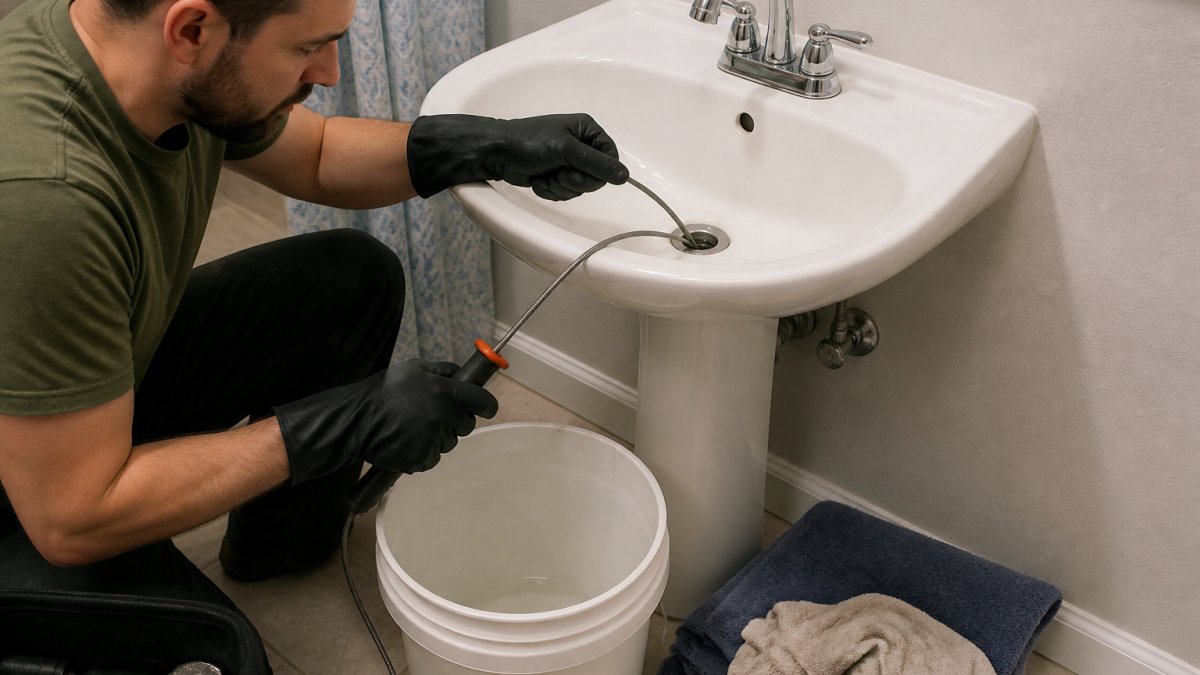
A drain snake is a flexible cable tool that breaks through a blockage inside a drain line. It works well for clogs within reach of the cleanout or fixture, but has real limits on a main line.
Using a Drain Snake or Sewer Auger
A plumbing snake or sewer auger can clear many blockages close to the access point:
- Put on gloves and place towels or a bucket under the cleanout
- Feed the cable into the drain or cleanout slowly
- Crank the handle clockwise to break through the blockage
- Pull the cable back and remove the debris
- Flush with hot water to test the flow
A manual snake works for short runs. A powered sewer auger reaches further into the main line. If the cable keeps hitting resistance at the same spot, you have likely reached a root mass or pipe damage, not a simple clog.
What Not to Pour Down the Drain
- Chemical drain cleaners on older or damaged pipes
- Large amounts of grease, oil, or fat
- Wipes labeled “flushable” (they are not)
Boiling water, baking soda, and vinegar can help minor kitchen sink clogs but will not clear a main line blockage. An enzyme cleaner maintains a clean pipe but cannot break through roots or a solid obstruction.
Pro Tip
Run hot water for a full minute after every kitchen use. It keeps grease moving instead of coating the pipe walls, which is where most buildup starts.
Run hot water for a full minute after every kitchen use. It keeps grease moving instead of coating the pipe walls, which is where most buildup starts.
Sewer Cleanout Unclogging: A Step-by-Step Approach
Sewer cleanout unclogging works best in order, from the easiest fix to the most involved. The cleanout is the capped pipe outside your home that gives direct access to the main line.
| Step | What to Do | When to Stop |
|---|---|---|
| 1 | Locate the cleanout cap outside | If you cannot find it, call a pro |
| 2 | Remove the cap slowly with gloves and towels ready | If sewage spills, stop and call a plumber |
| 3 | Feed a snake or auger into the line | If the cable jams repeatedly |
| 4 | Flush with water to test flow | If water still backs up |
| 5 | Repeat once if needed | If the clog returns, stop |
If the line clears but clogs again within weeks, the blockage was never fully removed. That pattern points to roots, pipe damage, or a sagging line that needs inspection.
When to Call a Licensed Plumber
Call a licensed plumber when DIY methods fail, multiple fixtures back up, or the same clog returns. A licensed plumber has the tools to clear the line and find out why it keeps clogging.
- Sewage is backing up into your home
- You smell gas or see standing wastewater
- The clog returns within days or weeks
At Acclaimed Drain & Plumbing Solutions, we run 24/7 emergency service with live dispatchers, so you are not waiting days with sewage in your home. Our team clears the line and then checks the system to find the cause, not just the symptom.
How a Sewer Line Camera Inspection Finds the Real Problem
A sewer line camera inspection sends a small waterproof camera through the pipe to show what is actually happening inside, the fastest way to find the real cause of a recurring clog.
The camera reveals:
- Tree roots entering through joints or cracks
- Cracked, offset, or collapsed pipe sections
- Grease and debris buildup along the walls
Instead of guessing, you get a clear picture of the pipe’s condition. Our technicians document findings with photos and video, then walk you through the options. If the line needs repair, trenchless sewer liner technology can often fix it without digging up your yard.
Key Takeaway
A camera inspection turns “my drain keeps clogging” into a clear diagnosis. That is the difference between a temporary fix and a permanent one.
A camera inspection turns “my drain keeps clogging” into a clear diagnosis. That is the difference between a temporary fix and a permanent one.
Preventing Sewer Line Clogs Long-Term
Preventing sewer line clogs comes down to matching your habits to the cause of your past clogs. Generic advice like “don’t pour grease down the drain” only helps if grease was your problem.
Prevention by Cause
If grease caused your clog:
- Pour fats, oils, and cooking grease into a sealed container and throw it in the trash, never down any drain
- Wipe greasy pans and plates with a paper towel before washing
- Run hot water for a full minute after every kitchen use to keep residual grease moving
If tree roots caused your clog:
- Schedule professional root cutting or hydro jetting on a recurring schedule, typically every 12 to 18 months for active root problems
- Ask about root-killing treatments that slow regrowth between cleanings
- Consider that root intrusion is a structural problem, not a habit problem, no amount of careful flushing will stop roots from regrowing into a cracked pipe
If foreign objects caused your clog:
- Teach everyone in the household what not to flush: wipes (even “flushable” ones), paper towels, feminine products, dental floss, cotton swabs, and cat litter
- Keep a wastebasket in every bathroom so the toilet is not the default disposal
- Use drain strainers in every shower and tub to catch hair before it reaches the branch line
If pipe damage or a sagging line caused your clog:
- Have the line inspected with a camera to confirm the defect
- Ask about trenchless repair options, which can often fix a damaged section without digging up the yard
- Understand that a bellied or offset pipe will keep collecting debris no matter what you put down the drain, cleaning buys time, but repair is the permanent fix
What Household Habits Cannot Prevent
This is the part most prevention guides skip. Household habits reduce the debris load on your pipes but cannot fix a structural defect. If your pipe is cracked, offset, bellied, or root-penetrated, the clog will return no matter how carefully you use your drains.
Habits control what goes into the pipe, but not its shape or condition. If the pipe is sound, good habits keep it clear; if it is damaged, they only delay the next backup.
Preventive Maintenance That Actually Pays Off
Preventive maintenance is the cheapest long-term fix, but only when matched to your actual risk:
- Annual or biennial professional cleaning for homes with mature trees near the sewer line, older cast-iron or clay pipes, or a history of repeat clogs
- Camera inspection every few years for homes over 30 years old or with known root problems, so you catch a developing defect before it becomes an emergency
- Hydro jetting on a schedule if grease or scale is your recurring issue, it scours the full pipe wall in a way a snake cannot
Best For
Homeowners with older pipes or a history of repeat clogs who want to stop emergency calls before they happen.
Homeowners with older pipes or a history of repeat clogs who want to stop emergency calls before they happen.
Key Takeaway
Match prevention to the cause. Habits stop grease, wipes, and hair from building up, but only inspection and repair stop roots and structural defects. If your clogs keep coming back despite good habits, the problem is the pipe, not your routine.
Match prevention to the cause. Habits stop grease, wipes, and hair from building up, but only inspection and repair stop roots and structural defects. If your clogs keep coming back despite good habits, the problem is the pipe, not your routine.
Frequently Asked Questions
How do you clear a recurring sewer clog?
Clearing a recurring sewer clog starts with stopping water use and checking which fixtures are backed up. If multiple drains are slow, the blockage is likely in the main sewer line. Use a drain snake or sewer auger through the cleanout, but if the clog returns within weeks, the underlying cause, such as tree roots, pipe damage, or heavy grease buildup, needs professional diagnosis. A sewer camera inspection identifies the exact problem so it can be fixed rather than repeatedly cleared.
Why does my main sewer line keep clogging?
A main sewer line that keeps clogging usually has an unresolved root cause. Common culprits include tree roots infiltrating pipe joints, accumulated grease and debris, sagging pipes that trap waste, or cracked and offset pipe sections. Older homes with clay or cast-iron pipes are especially prone to recurring blockages. Clearing the clog without addressing the cause guarantees it will return, often within a few months. A camera inspection reveals what is actually happening inside the pipe.
Is Dawn dish soap good for clogged drains?
Dish soap can help with minor grease clogs in a kitchen sink by lubricating the drain, but it will not clear a main sewer line blockage. For a recurring sewer clog, dish soap is ineffective because the blockage is typically beyond the trap, in the main line where roots, scale, or debris have built up. Relying on home remedies like dish soap, boiling water, or baking soda and vinegar delays the real fix and can allow the problem to worsen.
When should you call a plumber for a recurring sewer backup?
Call a licensed plumber when the same drain backs up more than once, when multiple fixtures are affected at the same time, or when you smell sewage in the house. These signs point to a main sewer line problem that DIY tools cannot resolve. A plumber can perform a sewer line camera inspection to identify root intrusion, pipe damage, or buildup, then recommend the right repair, whether that is hydro jetting, spot repair, or trenchless sewer liner technology.
Recurring sewer clogs are a sign that something deeper needs attention, not just another round of snaking. Acclaimed Drain & Plumbing Solutions offers flat-rate pricing, free estimates, and 24/7 emergency response across Tucson and Southern Arizona. We use sewer camera inspections and trenchless sewer liner technology to fix the cause, not just the clog. Claim your free estimate today and get a line that stays clear.